Posts

CTF Hack Dat Kiwi Writeups

Image
           I've participated in a CTF hack dat kiwi held on 19th and 20th November 2015. The CTF was organized by Abius X. Let me tell you this was one of the finest CTF that I've every participated. Everything was awesome and organised. I've solved few challenges and was at 234th rank  http://hack.dat.kiwi/scoreboard  (Handle: Transformers) SSL_Sniff 1 (50 points) A wireshark file was given (dump.pcap) can be found https://www.dropbox.com/s/85f7kipys931m8n/dump.pcap?dl=0

MY OSCP REVIEW

Image
MY OSCP REVIEW About me I am just a guy who has done B.E (Computer Engineering), C.E.H and I am doing vulnerability assessment for different clients in Mumbai. Inspiration to do OSCP Wanted to read technical stuff only then skip this para. Like other guyz I thought that OSCP is one of the most difficult task in the world of IT Security. And yes, it is one the difficult mission you could ever face. Back in Dec 2014 I was really bored with the conventional vulnerability assessment thing, I wanted to do some more exploitation and some black hat stuff. But in our job we were not allowed to do so, as the environment used to be critical most of the time and time for completing the task was less. So I asked few question on some group in facebook regarding How can I learn more exploitation stuff. There was a guy with the name Mr.WhiteW0rm who have given me a brilliant answer and recommended me to do OSCP. That time I thought though I won't be able to do OSCP but at least I...

Walkthrough Tr0ll 2 VM (Vulnhub)

Image
Tr0ll 2 vulnerable VM walkthrough. 1) Nmap scan:

EchoServer (Strcpy) bufferoverflow Securitytube Exploit research Megaprimer

Image
       This blog is all about Exploit Research Video #3 form Pentester Academy/Security Tube. The exploit Research Megaprimer can be found on http://www.securitytube.net/groups?operation=view&groupId=7 Here I will be demonstrating buffer overflow on a strcpy or echo server that is written in c programming language by Vivek Ramachandran. All you need to do is double click on the Server-strcpy.exe file to run the server. Configuration/Setup:

Whitehat Wargame websecurity challenges

Image
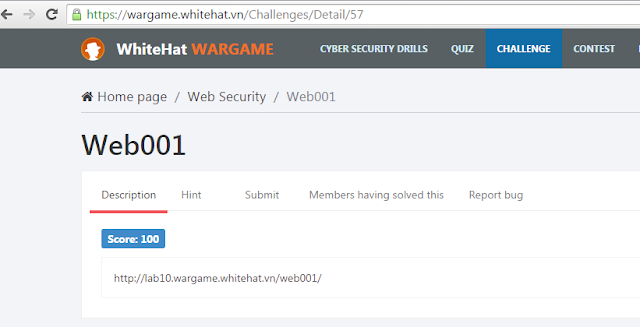
 Walkthrough of some Web security challenges that are present at Whitehat wargame https://wargame.whitehat.vn/Challenges/List/2 Note: It is the walkthrough of challenge that is present not at the above link. It is not a CTF WebSecurity Challenge Web001

Pentester Academy Command Injection ISO basilic 1.5.14 exploit

Image
This writeup is published on infosecinstitute.          Pentester academy has launched a Command Injection ISO virtual image of Ubuntu with lots of real world vulnerable application framework. Refer the following link for download and information purpose: https://www.vulnhub.com/entry/command-injection-iso-1,81/ http://www.pentesteracademy.com/course?id=12 Lab setup: 1) Kali linux (Bridged or NAT) . My Kali Linux Ip was 192.168.1.102 2) Command Injection ISO (Bridged or NAT). My target IP was 192.168.1.103 Login into command injection ISO with user name securitytube and password 123321 to check for the DHCP ip address allocated or simply do a ping scan (nmap -sn) Checking out for port 80 on Command Injection ISO (192.168.1.103)

Minishare 1.4.1 Bufferoverflow

Image
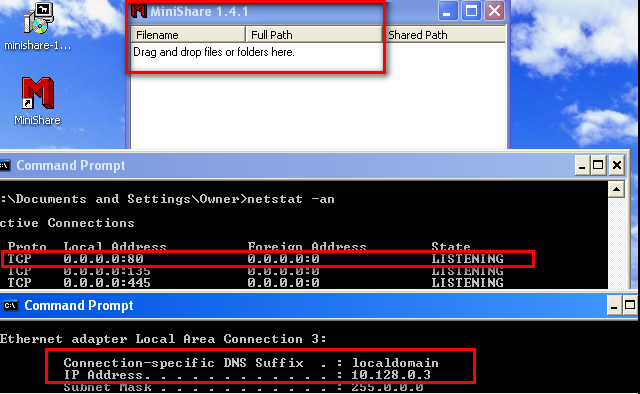
You can download the server from: https://www.dropbox.com/s/zhivgb79wtbce37/minishare-1.4.1.exe?dl=0 Exploit code in ruby: https://www.exploit-db.com/exploits/616/ The vulnerability is a long URL in the GET request. Eg:- GET AAAAAAAAAAAAAAAA..... HTTP/1.1 Lab Setup: 1) Windows xp ( I am using windows xp sp1) 2) Immunity debugger installed on the windows xp machine. 3) Minishare 1.4.1 installed on windows xp running on port 80. 2) Kali linux for scripting and exploiting. Configure the victim: I have installed Minishare server 1.4.1 and it is listening for connections on port 80, as depicted below. Generate Sample script to crash: We will try to smash the stack by sending a buffer of 2000 A's with the help of the following script. #!/usr/share/python import socket,sys s=socket.socket(socket.AF_INET,socket.SOCK_STREAM) s.connect((sys.argv[1],80)) buff="GET " buff+="A"*2000 buff+=" HTTP/1.1\r\n\r\n" s.send(buff) s.close...